Category: Stone & Veneer

Choosing Stone That Handles Extreme Desert Heat

In a Tucson neighborhood like Sam Hughes, where the historic homes sit under full sun most of the year, the stone you choose has to survive conditions that would be exotic almost anywhere else. Surface temperatures on a west-facing wall here can climb well past anything you would feel in a milder climate, and the swing from a 105-degree afternoon to a cool desert night stresses material every single day. Picking stone for the desert is a different calculation than picking it for looks.

Heat, UV, and thermal cycling

Three desert forces work on stone: sustained high heat, relentless UV, and the big daily temperature swing. Heat and UV fade some materials and degrade sealers fast. The daily expansion and contraction, thermal cycling, works joints and any trapped moisture like a slow lever. Stone that shrugs this off in Arizona is dense, stable, and light enough in color that it does not bake. The mistake I see is people importing a look from a cooler climate and watching it fail in a couple of summers.

What works in the desert

  • Light-colored, dense stone. Lighter stone reflects heat and stays cooler to the touch, important on any surface people walk on barefoot or touch. Dense stone resists the thermal and moisture cycling.
  • Local and regional stone. Sandstone, flagstone, and the desert-adapted stone quarried in the Southwest evolved with these conditions and generally handle them best, and it is cheaper to truck.
  • Adobe and burnt adobe, the traditional Sonoran choice, which has enormous thermal mass and keeps interiors cooler, though it needs proper maintenance.

The thermal-mass advantage of heavy masonry, staying cool through the day and releasing heat at night, is real, and the Department of Energy covers it in its guidance at Energy Saver.

What struggles here

Dark stone gets punishingly hot underfoot and around pools. Very porous, soft stone that stays wet after a monsoon and then bakes can spall. And any assembly relying on a film-forming sealer to look good will disappoint, because UV chews those coatings up fast, one reason I steer desert clients toward breathable finishes only when a finish is needed at all. For the broader material rundown, see fieldstone, limestone, bluestone: a regional primer.

Detailing matters as much as the stone

Even the right stone fails if the install ignores the desert. Allow for thermal movement, keep dark heat-absorbing stone away from bare-foot zones, and detail so the brief but intense monsoon rains drain instead of soaking in. Budget roughly $20 to $50 per square foot installed for quality desert-appropriate stonework, more for adobe restoration. Choose light, dense, and local, and the desert becomes the stone’s friend instead of its enemy.

Color, finish, and bare feet

In the desert, color and finish are not just style choices, they decide whether a surface is usable in July. Dark stone around a pool deck or on a patio can reach temperatures that genuinely burn bare feet on a Tucson afternoon, so I steer clients toward light, warm tones for anything people walk on unshod. Finish matters too: a highly polished surface both bakes and gets slick, while a natural cleft or flamed finish stays a touch cooler and gives grip when the monsoon rain hits it. For vertical work like veneers and walls, you have more freedom with darker, richer color because nobody stands on a wall, though a west-facing dark wall still soaks up afternoon heat and radiates it into the evening. The other desert reality is dust: lighter stone hides the fine caliche dust that settles on everything here, where dark stone shows every bit of it and looks perpetually dirty. Think about where the stone sits, underfoot versus vertical, shaded versus full sun, and let that drive the color and finish as much as the look you are after.

Frequently asked questions

What stone handles desert heat best? Light-colored, dense stone, and regionally quarried desert stone like sandstone and flagstone. Light color reflects heat and stays cooler underfoot; density resists the daily thermal and moisture cycling. Traditional adobe and burnt adobe also perform well thanks to their thermal mass.

Why does dark stone fade or fail in the desert? Intense UV fades pigments and degrades sealers, and dark stone absorbs heat, reaching high surface temperatures that make it unpleasant to touch and stress the material and joints through daily expansion and contraction. Lighter, denser stone holds up far better.

Should I seal stone in a hot dry climate? Only if there is a specific need, and then with a breathable penetrating product. Film-forming “wet look” sealers break down quickly under desert UV and can trap the moisture from monsoon rains. Many dense desert stones do fine with no sealer at all. Heat load is not only a surface question: where the stone wraps a mechanical enclosure, a Bronx HVAC contractor will want clearance for airflow before anything gets veneered in.
Installing Stone Veneer Over a Block Wall

Stone veneer over concrete block is one of the most common upgrades I coordinate, and one of the most commonly botched. A client in Dupont Circle wanted a plain block garden wall dressed in stone, and the first bid we got skipped the two details that make or break the job. Done right, veneer over block lasts for decades. Done wrong, it holds water against the wall and starts shedding stone in a few years. The stonework people admire is the easy part; the wall behind it is where the job is won or lost.

Installing Stone Veneer Over a Block Wall
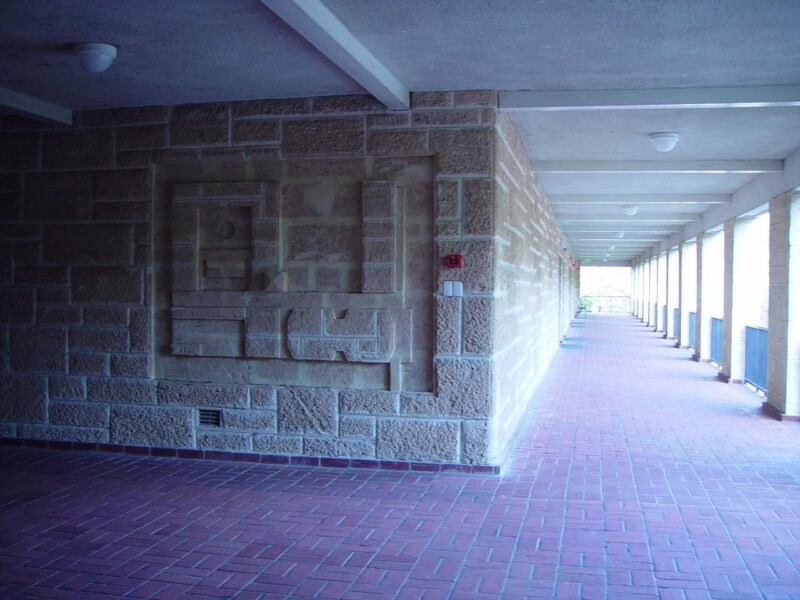
Photo: Hope Alexander · PDM

Full-bed versus thin veneer

First decision: full-bed stone (roughly three to five inches thick, needing a supporting ledge or footing) or thin veneer (about one inch, adhered to the wall without a separate footing). Thin veneer is far more common on retrofits over existing block because it adds little weight and needs no new foundation. Full-bed gives a deeper, more authentic look but has to be planned into the structure from the start. For most homeowners dressing an existing block wall, thin veneer is the practical choice.

The two details that actually matter

Over a block wall, especially any wall exposed to weather, the assembly behind the stone is what keeps it alive:

  • A moisture barrier and drainage plane. Water will get behind veneer; the assembly has to let it drain and dry rather than trapping it against the block. On exterior walls this means a weather-resistive barrier and, often, a drainage mat.
  • A proper scratch coat and bonding. Thin veneer is set in mortar over a prepared, often lath-and-scratch-coat surface so it actually bonds. Slapping stone onto bare, dusty block is the number one failure I see.

Because the block itself has to be sound first, this job assumes you understand what is behind it, which is why I recommend reading understanding concrete block (CMU) construction before you start.

Prep, then stone

The sequence on a typical exterior thin-veneer job runs: confirm the block is sound and clean, install the weather barrier and metal lath where required, apply a scratch coat and let it cure, then set the stone in mortar working bottom to top, and finally grout or point the joints (or leave a dry-stack look if the stone is designed for it). Rushing the cure or skipping the barrier is what causes callbacks.

What it costs and how to hire

Installed thin stone veneer commonly runs $20 to $45 per square foot depending on the stone and the wall prep required; full-bed runs higher because of the structural support. Manufactured and natural veneer installation standards are published by the Concrete Masonry and Hardscapes Association. When you hire, ask specifically how the contractor handles the moisture barrier and bonding, if they only want to talk about the stone pattern, keep looking.

Interior walls and the fireplace exception

Everything I said about moisture barriers applies to exterior walls, but a lot of veneer-over-block work happens indoors, on a basement feature wall or a fireplace surround, and the rules shift. On a dry interior wall not exposed to weather, you can skip the weather-resistive barrier, but you still need a sound, clean, properly prepared bonding surface, so the scratch coat or a proper adhesive system still matters. The fireplace is the one place I get strict again: any stone within the code-required clearance of a firebox has to handle heat, which means non-combustible materials and, for the firebox itself, firebrick and refractory mortar rather than decorative veneer. I have seen thin manufactured veneer set too close to a firebox discolor and let go over a couple of heating seasons. So indoors, relax about the drainage plane but not about the bond, and around any heat source, treat the clearances and materials as non-negotiable. When in doubt on a fireplace, check the appliance’s listed clearances and your local code before you set a single stone.

Frequently asked questions

Can you put stone veneer directly on a concrete block wall? Not directly onto bare block for a durable job. The block must be clean and sound, and an exterior wall needs a weather-resistive barrier and a proper bonding surface (often lath and a scratch coat) before the stone is set in mortar. Skipping that is the main cause of veneer failure.

What is the difference between thin veneer and full-bed stone? Thin veneer is about an inch thick, lightweight, and adhered without a separate footing, ideal for retrofitting over existing block. Full-bed stone is three to five inches thick, heavier, and needs structural support like a ledge or footing. Most retrofit projects use thin veneer.

Does stone veneer hold moisture against the wall? It can if the assembly is wrong. Water always gets behind veneer, so a correct installation includes a drainage plane and moisture barrier that let the wall drain and dry. A veneer applied without that traps moisture against the block and eventually fails. On commercial elevations that assembly gets washed on a schedule, and an industrial cleaning contractor in Atlanta works to a spec that keeps water out of the drainage plane.

Fieldstone, Limestone, Bluestone: A Regional Primer

People ask me for “stone” the way they ask for “a car.” There are dozens of choices under that one word, and the right one depends on where you live, what you are building, and how much you want to spend keeping it up. I have laid all the common types over the years, and the differences between them are practical, not just cosmetic. Here is the primer I wish more homeowners had before they picked.

Fieldstone, Limestone, Bluestone: A Regional Primer
Photo: Chicago Art Department · BY 2.0

Fieldstone: the local, rugged option

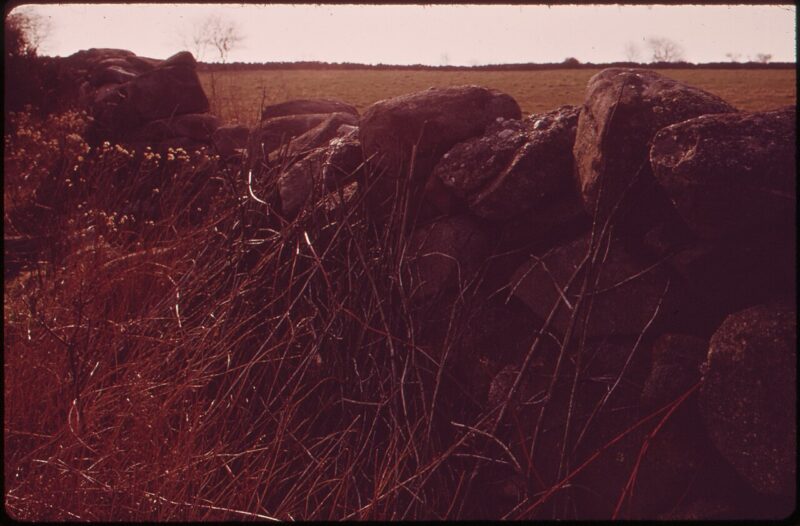
Fieldstone is exactly what it sounds like, stone gathered from the ground rather than cut from a quarry. It is irregular, comes in whatever colors the local geology offers, and gives you that rustic, been-here-forever look. It is a favorite for freestanding walls, rustic veneers, and country-property landscaping. The tradeoff is labor: because every piece is a different shape, a skilled mason spends real time fitting them like a puzzle, so the material may be cheap while the installation is not.

Limestone: workable and warm

Limestone is a sedimentary stone that ranges from creamy white to warm buff and tan. Masons like it because it is relatively soft and easy to cut and shape, which makes it common for veneers, coping, sills, and steps. That same softness is its weakness: it is more porous than granite, absorbs water, and in harsh freeze-thaw or heavy salt exposure it can weather faster. In a hot dry climate it holds up beautifully; in a wet freezing one it needs the right detailing.

Bluestone: the hardscape workhorse

Bluestone, a dense sandstone quarried mainly in the northeastern U.S., is the go-to for patios, walkways, treads, and pool coping. It is hard, wears well underfoot, and comes either thermal (a consistent sawn finish) or natural cleft (a textured surface with more grip). It is one of the more expensive materials by the square foot, but for a horizontal surface people walk on every day, its durability earns the cost.

Matching stone to the job

A few rules I follow:

  • Horizontal, high-traffic surfaces (patios, steps): favor dense stone like bluestone or granite.
  • Vertical veneers and walls where looks lead: fieldstone or limestone give the most character.
  • Freeze-thaw climates: choose denser, less porous stone and detail for drainage.
  • Hot dry climates: softer stones like limestone perform well and stay cooler than dark dense stone.

If you are weighing natural stone against the manufactured look-alikes, the cost and longevity math is a whole separate decision I lay out in natural stone versus manufactured veneer.

What to budget

Material alone ranges widely, roughly $15 to $50 per square foot depending on the stone and whether it is full-bed or thin veneer, with installation often matching or exceeding that because stonework is slow, skilled labor. Selection, sourcing, and hardscape detailing guidance is available through the Concrete Masonry and Hardscapes Association. Buy from one lot where you can, because stone color varies batch to batch, and always order more than the plan calls for so your repairs years later still match.

Full-bed versus thin veneer changes the math

One thing that trips people up when they price stone is that the same stone comes two ways, and it changes both the look and the cost. Full-bed stone is the real thing at full thickness, three to five inches, which reads with genuine depth and shadow but is heavy enough to need a supporting ledge or footing. Thin veneer is the same stone sawn down to about an inch, light enough to adhere to a wall without a separate foundation, which makes it the practical choice for dressing an existing block wall or a house exterior. Thin veneer costs less to ship and to install, but on close inspection the shallow edges can give it away, so I steer clients toward full-bed where the stone meets the eye at close range, like a seat wall cap or a column, and thin veneer for broad vertical faces. Whichever you pick, order from a single lot and buy extra, because stone color drifts batch to batch and a repair years later has to match.

Frequently asked questions

What is the most durable natural stone for a patio? Dense stones like bluestone and granite wear best underfoot and resist weathering. Bluestone in particular is a proven patio and walkway material because it is hard, comes in slip-resistant cleft finishes, and holds up to daily traffic and weather.

Is limestone a good choice in a cold climate? It can be, but choose a denser limestone and detail it carefully for drainage. Because limestone is porous, poor detailing lets it absorb water that then freezes and spalls the stone. In hot dry climates limestone is an excellent, low-stress choice.

Why is stonework so expensive to install? Because it is slow, hand-fitted work. Irregular stone like fieldstone has to be selected and shaped piece by piece, so even inexpensive material carries high labor. The installation, not the stone, is usually the bigger line item.

Real Stone or Manufactured Veneer: Which Lasts, and What It Costs

Standing three feet from a well-installed wall, most people cannot reliably tell quarried stone from the manufactured product. Standing three feet from the same wall twenty years later, almost anyone can. That gap is the honest way to frame this choice: the two materials start close and diverge slowly, and how much that matters depends on how long you intend to own the result.

One is quarried, the other is cast concrete

Natural veneer is real stone, cut or split to a thickness that lets it be applied as a facing rather than laid as a structural wall. Manufactured veneer is lightweight concrete, cast in moulds taken from real stone and coloured with pigment through the mix and on the surface. It is a genuine masonry product rather than an imitation panel, and the good ones are convincing. The difference that matters is not authenticity, it is that the colour in a manufactured unit is a finite layer while in stone it goes all the way through.

Weight is what drives the installed cost

Manufactured veneer weighs roughly a third to a half of what natural stone does per square foot, and that single fact cascades through the budget. Lighter units are faster to place, cause less fatigue over a day, need less structural support, and often avoid the need for a supporting ledge or shelf angle that heavy stone would require. Uniform thickness helps too, because there is far less fitting and cutting. The material price gap is real but the installation gap is usually larger, and on a big elevation the labor difference can exceed the material difference. Weight also decides what is possible on a retrofit. Adding heavy stone to an existing wall may require structural support that was never built into it, and once a shelf angle and its fixings enter the scope the cost comparison stops being about the facing at all.

How each one ages through freeze-thaw

Stone weathers rather than fails. It darkens, it grows lichen, mortar joints need attention every few decades, and most people consider the result an improvement. Manufactured veneer holds its appearance well for a long time and then reaches the end of a finite service life: the pigmented surface gradually fades, and in a climate with hard freeze-thaw cycling the exposed faces can begin to lose their skin. Once that starts on one elevation it is difficult to patch invisibly, because new units will not match aged ones.

The failure that ends a veneer job early

Whichever material goes on the wall, the majority of failures are water rather than product. Veneer of either type is a cladding, not a waterproof layer, and it depends on the assembly behind it: a weather-resistive barrier, a drainage plane, correctly lapped flashing, and weeps at the base that are actually open. When water gets behind veneer and cannot leave, it freezes and pushes units off the wall, and it rots whatever framing is behind. Installations that fail in under ten years almost always failed at the flashing, and no upgrade in stone quality compensates for it.

Matching an older house

On a period property the deciding factor is usually context rather than cost. Manufactured units repeat, because they come from a limited number of moulds, and on a large uninterrupted elevation the repetition becomes visible once you notice it. Mixing sources and orienting units deliberately reduces the effect. Natural stone has no such constraint, and where the house already has stone details, matching them convincingly is much easier with the real material. For a chimney breast, a garden wall, or a feature panel, the quantities are small enough that the price difference is modest.

Frequently asked questions

How long does manufactured veneer last? Reasonably installed, several decades, with the surface appearance gradually softening well before anything structural happens. Its life is shortest at ground level, in splash zones, and anywhere it is regularly wetted and frozen.

Can veneer be applied over existing brick? Often yes, provided the brick is sound and the assembly still manages water correctly. The wall has to carry the extra weight, and flashing and weeps have to be reworked rather than buried behind the new facing.

Does either need sealing? Usually not, and sealing can trap moisture. Where a manufactured product recommends a breathable treatment for a splash zone, follow the manufacturer instruction rather than applying a general-purpose film-forming sealer over the whole elevation.

Desert Stonework in Tucson: Materials, Heat and Care

A homeowner in the Catalina Foothills called me in July, right in the middle of monsoon season, because the flagstone patio another crew had laid the year before had buckled and half the veneer on her seat wall had slid off in a single storm. Standing there in 104-degree heat looking at the mess, I could see both problems from ten feet away: wrong material, no drainage.

Desert Stonework in Tucson: Materials, Heat and Care
Photo: Amal Kumar ( https://polyhaven.com/all?a=Amal%20Kumar / https://web.archive.org/web/20230902205408/https://polyhaven.com/all?a=Amal%20Kumar ) via Poly Haven · CC0

Stonework is my trade. I build patios, retaining walls, and stone veneer, and the Sonoran Desert is a specific, unforgiving place to do it. The heat, the UV, the caliche underfoot, and the monsoon all fight the work in ways that catch out crews who learned masonry somewhere wet. Here’s what actually holds up out here.

Stone that belongs in the desert

Native and dense stone is your friend. Arizona flagstone and the denser sandstones handle our sun better than soft, porous stone that flakes as it bakes and cools. Burnt adobe and concrete block are traditional here for good reason, and you’ll see historic adobe all through older neighborhoods like Barrio Viejo. Manufactured veneer can work, but the cheaper products chalk and fade under our UV faster than the brochure promises. If you want the long version of picking material for this climate, I go deep in this guide to choosing stone that handles extreme desert heat.

What heat and UV do to a wall

Surface temperatures on dark stone can top 150 degrees on a June afternoon, so light colors stay far more comfortable underfoot on a patio. Heat also shortens the working time on mortar and thinset dramatically; I work in the shade, keep materials cool, and mist the work so it doesn’t flash-set before it bonds. UV is the quiet killer of sealers and cheap veneer adhesives, which is why product choice matters more here than almost anywhere else in the country. A cure that would take a day back East can happen in an hour here, and rushed adhesive is why that seat wall let go.

Monsoon and drainage, the part everyone underestimates

The summer monsoon, roughly July through September, can dump an inch of rain in twenty minutes onto ground that doesn’t absorb it. That water has to go somewhere, and if you haven’t planned for it, it goes through your hardscape. Tucson’s grading and stormwater rules exist precisely because of this, and the city’s floodplain and drainage guidance is worth a read before any hardscape job; you can start with the City of Tucson resources. My rules are simple: pitch every patio away from the house, build on a base that actually drains, and put weep holes and clean drainage gravel behind every retaining and veneer wall so water can escape instead of pushing the wall over.

Caliche makes drainage even more critical

Under a lot of Foothills lots sits caliche, a cemented calcium-carbonate hardpan that’s brutal to dig; footings sometimes need a jackhammer or a powered breaker to get through it. Caliche also holds water like a bathtub, so any water you trap behind a wall has nowhere to go. Between the caliche and the monsoon, this is not a dig-and-hope project. I’d bring in a Tucson masonry contractor who builds for the desert, not someone who moved here from a wet climate last season and hasn’t met caliche yet.

Caring for desert stonework

Reseal flagstone every two to three years with a breathable, UV-stable sealer, rinse the salts and dust off periodically, and check your weep holes before monsoon season starts so they aren’t packed with dirt. After a big storm, walk the walls and patio and look for new cracks or any stone that shifted. Catching a small movement early is a caulk-and-reset afternoon; ignoring it is a rebuild.

What desert stonework costs

A flagstone patio installed usually runs $18 to $35 per square foot. Stone veneer tends to land at $20 to $45 per square foot depending on the stone and the wall behind it. A structural retaining wall runs roughly $30 to $70 per face foot, and caliche excavation can add meaningfully to any of these if we have to break through hardpan. Sealing is about $1 to $3 per square foot. Treat these as planning ranges; the stone you choose and the digging conditions move the number most.

Frequently asked questions

What stone holds up best in Tucson’s heat? Dense native stone like Arizona flagstone and the harder sandstones handle sun and thermal cycling well, and lighter colors stay cooler underfoot. Softer, porous stone and cheap manufactured veneer tend to flake, chalk, or fade under our intense UV.

How does the monsoon damage stonework? A monsoon storm drops a lot of water fast onto ground that barely absorbs it. Without proper grading and drainage behind walls, that water undermines patio bases and builds pressure behind retaining and veneer walls, which buckles patios and pushes walls out. Drainage is the fix.

Do I need to seal desert flagstone? For most flagstone, yes, with a breathable UV-stable sealer every two to three years. It slows staining and surface wear from sun and salts. Skip film-forming sealers, which can cloud and peel under desert UV.

Stone Veneer That Lasts in the Georgia Climate

A couple of years back I got called out to a house off Roswell Road in Buckhead where the manufactured stone on the front columns was letting go in sheets. The homeowner figured her installer had ripped her off. He had, sort of, but the real culprit was the same thing that wrecks half the veneer I see around Atlanta: water, red clay, and a crew that skipped the drainage plane behind the stone. I’ve been setting stone and brick for more than thirty years, and if there’s one product people buy without understanding what they’re buying, it’s veneer.

Stone Veneer That Lasts in the Georgia Climate
Photo: Beasley, C. N., creator · PDM

“Veneer” just means a thin skin of stone, or something molded to look like stone, hung on the face of a wall. It carries no structural load; the wall behind it does that. That’s not a knock. Done right, veneer is a smart, good-looking way to dress up a brick ranch or a new Craftsman front. Done wrong in the Georgia climate, it’s a moisture trap that stains, spalls, and eventually lets go of the wall.

Natural stone versus manufactured

You have two real choices. Natural stone veneer is actual quarried fieldstone, limestone, or granite cut thin. It’s heavier, pricier, and lasts effectively forever if it’s set right. Manufactured stone veneer is molded, dyed concrete. It’s lighter, cheaper, faster to set, and the color is only as deep as the surface, so a hard chip shows gray underneath. Neither is “better” across the board; they fail differently. I break the trade-offs down in natural stone versus manufactured veneer, but the short version is this: manufactured is fine when it’s installed the way it’s supposed to be, and a disaster when it isn’t.

What Georgia’s climate does to veneer

Atlanta is humid, it rains hard, and that combination is rough on masonry. Three things I see over and over in Buckhead, Decatur, and Sandy Springs:

  • Efflorescence. That white, chalky bloom on the surface is salt carried out by moisture moving through the wall. It’s a symptom of water where it shouldn’t be.
  • Organic staining. Our shade and humidity grow algae and mildew on damp north-facing veneer. Green and black streaks are a moisture-and-airflow problem, not just a dirty wall.
  • Red clay movement. Georgia’s expansive red clay swells when wet and shrinks when dry, so foundations heave and settle. That movement telegraphs up into rigid veneer as stair-step cracks.

We don’t get brutal winters, but Atlanta sees enough freeze-thaw cycles that any water sitting in a poorly drained veneer will eventually pop the face off. Which brings me to the part that actually matters.

How to buy veneer that lasts here

The product barely matters compared to what goes behind it. When I bid veneer in Georgia, the wall assembly always includes a weather-resistant barrier, a drainage plane or gap, proper flashing, and weep holes at the bottom so any water that gets behind the stone can drain and dry. Skip that and you’ve built a sponge. The Concrete Masonry & Hardscapes Association publishes installation standards that spell this out, and any crew doing serious Atlanta masonry should follow them without being asked.

Questions to ask before you sign:

  1. What goes behind the veneer for drainage and moisture control?
  2. Where are the weep holes, and how are the top edge and the windows flashed?
  3. Is the base of the veneer held a few inches above grade? Stone touching that red clay wicks water like a straw.

What it costs

In the Atlanta market for 2026, figure roughly $18 to $32 per square foot installed for manufactured stone veneer, and $30 to $55 per square foot for natural thin stone, materials and labor together. A typical front-of-house accent, columns, a water table, and a chimney chase, often runs $4,000 to $12,000. Those are ballpark estimates, not a guarantee. The drainage details and site access drive the real number more than the stone you pick.

Frequently asked questions

Does manufactured stone veneer hold up in Georgia humidity? Yes, when it’s installed over a proper drainage plane with flashing and weep holes; the product itself survives fine, and it’s trapped moisture behind a badly built wall that causes the failures I get called about.

Why is my stone veneer turning white? That white haze is efflorescence, soluble salt pushed to the surface by moisture inside the wall, and it usually points to a drainage or flashing problem behind the veneer rather than a surface you can scrub once and forget.

Should veneer touch the ground? No. Keep the bottom of the veneer a few inches above grade, because in Atlanta’s red clay, stone set right against the soil wicks up ground moisture and fails at the base first.