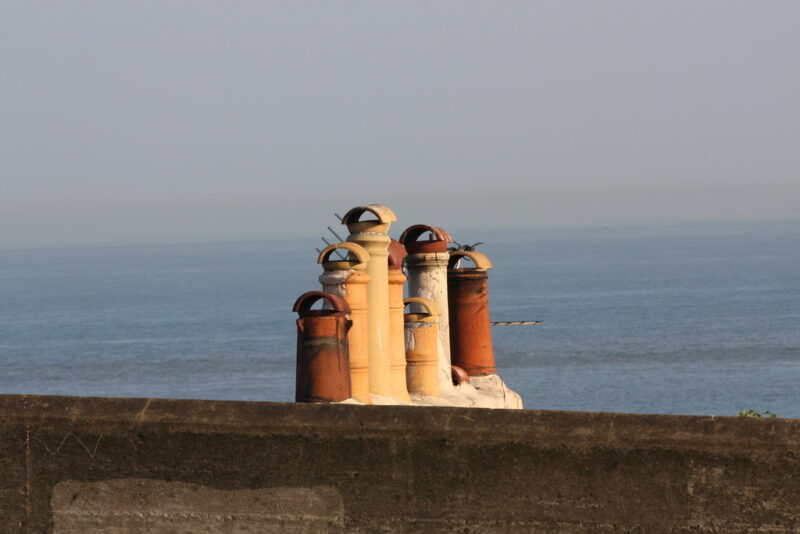
An old chimney rarely fails all at once. It gives you years of small warnings, and the choice between relining it and rebuilding it usually comes down to how many of those warnings got ignored. I have relined chimneys that had decades left in them and torn down others that were held together by paint and hope. Knowing which situation you are in saves both money and, occasionally, a house fire.
Two different problems
It helps to separate the chimney into two parts, because they fail for different reasons. The liner is the inner flue that carries smoke and combustion gases safely up and out. The structure is the brick or block stack you see. Relining fixes the first; rebuilding addresses the second. A chimney can have a shot liner and a perfectly sound structure, or a fine liner inside a stack that is crumbling at the top.
When relining is the answer
Relining makes sense when the masonry stack is structurally sound but the flue is cracked, undersized, or missing. Common triggers include an old unlined chimney, a clay tile liner cracked by a flue fire or settlement, or switching to a new appliance that needs a different flue size. Options range from stainless steel liners to cast-in-place systems, and a good sweep will run a camera up the flue before recommending anything. Relining a residential flue commonly runs $2,500 to $7,000 depending on the method and height.
When rebuilding is unavoidable
Rebuilding, in part or in full, becomes the honest answer when the structure itself has failed:
- The brick above the roofline is spalling, leaning, or has open joints all around
- The crown is cracked and has let water into the stack for years (the failure I detail in why chimney crowns fail)
- Mortar has washed out deep into the stack, not just the surface joints
- The chimney is pulling away from the house
Often the fix is a partial rebuild: tearing down and relaying just the exposed portion above the roofline, which takes the worst of the weather. That runs commonly $2,000 to $6,000. A full rebuild from the firebox up is a much bigger job and can exceed $10,000.
How to make the call
Get a chimney professional to inspect and, ideally, to show you camera footage of the flue and photos of the crown and upper stack. Be wary of anyone who quotes a rebuild without inspecting the liner, or a reline without looking at the structure; the two problems are independent. Because chimneys are combustion appliances, safe operation and maintenance guidance is available through the EPA’s wood-heat program at EPA Burn Wise. When the liner is bad but the stack is sound, reline. When the structure is failing, no liner will save it, and patching just delays the rebuild.
Get a real inspection before you decide
Neither relining nor rebuilding should be decided from the ground with a pair of binoculars, yet that is how a lot of quotes get written. A proper chimney inspection looks at the whole system: the flue interior with a camera, the crown and cap, the exterior masonry at and above the roofline, the flashing where the chimney meets the roof, and the firebox and smoke chamber. That is the difference between a level-one glance and the more thorough evaluation you want before spending money. Ask to see the camera footage and photos yourself; a trustworthy chimney professional expects that and will walk you through what each image shows. Be especially wary of anyone who arrives, glances up, and immediately quotes a full rebuild, or conversely promises a reline will fix a stack that is visibly crumbling at the top. The inspection is cheap relative to the repair, and it is the only way to separate a liner problem from a structural one, which is the whole question.
Frequently asked questions
Is it cheaper to reline or rebuild a chimney? Relining is usually cheaper when the masonry structure is sound, often $2,500 to $7,000. Rebuilding is warranted when the brick and mortar have failed, and a partial rebuild above the roofline commonly runs $2,000 to $6,000. They solve different problems, so the right choice depends on what has actually failed.
How do I know if my chimney liner is bad? A camera inspection is the reliable way. Warning signs include pieces of clay tile in the firebox, draft problems, and staining, but only a scan up the flue confirms cracks or gaps. Any chimney that has had a flue fire should be inspected before use.
Can I just leave an old unlined chimney alone? Not if you are burning in it. An unlined or failed flue lets heat and combustion gases reach the surrounding structure, which is a fire and carbon-monoxide risk. If the chimney is decorative and unused, it still needs to be kept weather-tight so it does not decay.